


Proton therapy is an advanced form of radiation treatment used for certain cancers. It uses proton beams instead of conventional X-rays, allowing doctors to target tumors while limiting radiation exposure to nearby healthy tissue.
For international patients, Germany and Spain are two European options for proton therapy. Both offer specialist treatment centers and access to experienced oncology teams. However, treatment costs, eligibility, and arrangements can differ.
Patients should compare treatment plans before choosing a destination. The best option depends on the cancer type, tumor location, medical history, and specialist recommendations.
When Proton Therapy Is Indicated
Proton therapy is not suitable for every cancer patient. Doctors consider it when reducing radiation exposure to healthy organs is especially important.
It may be considered for:
- Brain and spinal cord tumors
- Certain head and neck cancers
- Eye tumors, including selected ocular cancers
- Pediatric cancers
- Tumors close to important organs
- Selected sarcomas and other complex cancers
Children may benefit because their bodies are still developing. Limiting radiation exposure can help reduce the risk of long-term side effects.
However, proton therapy is not automatically better than conventional radiotherapy. An oncology team must assess whether it offers a meaningful benefit. The final decision depends on the diagnosis and treatment goals.
Germany: Centers and Access
Germany has established proton therapy facilities and experience in treating complex cancers. International patients can request an assessment before traveling.
A few popular German institutions associated with proton therapy are
- Munich University Hospital
- Rechts der Isar University Hospital
- Charité University Hospital
Patients should confirm whether the hospital offers proton therapy for their specific diagnosis. Not every listed hospital necessarily offers the same treatment services.
The usual process starts with sending medical records for review. The hospital's specialists assess the diagnosis, previous treatments, and imaging results. If proton therapy is appropriate, the team prepares a proposed treatment plan.
International patients should request written confirmation of treatment availability, estimated costs, and appointment dates. This helps them arrange travel and accommodation before departure.
Spain: Centers and Access
Spain is another option for patients seeking proton therapy in Europe. One popular institute for international patients is the Quirónsalud Proton Therapy Center in Madrid.
The center is listed specifically for proton therapy and oncology services. The first step is usually submitting relevant medical documents, which may include pathology reports, MRI scans, CT scans, and previous treatment records.
The medical team reviews the case and determines whether proton therapy is suitable. If accepted, patients receive information about the treatment schedule and expected costs.
Patients should also ask whether the quoted package includes planning scans, consultations, treatment sessions, and follow-up appointments. These details can affect the total cost.
Germany and Spain: Treatment Comparison
The following table provides an initial comparison for international patients. Prices and treatment schedules require confirmation from the selected center.
|
Factor |
Germany |
Spain |
|---|---|---|
|
Centers |
Munich University Hospital, Rechts der Isar University Hospital, Charité University Hospital |
Quirónsalud Proton Therapy Center |
|
Price |
Available upon request |
Around €60,000 |
|
Course length |
Depends on diagnosis and treatment plan |
Depends on diagnosis and treatment plan |
|
Language |
German; English |
Spanish; English |
A proton therapy course may involve daily sessions over several weeks. Some patients need shorter schedules, depending on their diagnosis and prescribed treatment. The listed price for Spain is an initial reference, not a guaranteed final quotation. Germany's treatment costs also require direct confirmation.
Patients should request an itemized estimate covering treatment planning, consultations, imaging, and additional services. Travel, accommodation, and living expenses may be separate.
Paperwork and Referral
International patients generally need to provide medical documents before receiving a treatment decision. Preparing these records early can help avoid delays.
Commonly requested documents include:
- Recent oncology consultation reports
- Histopathology and biopsy results
- MRI, CT, and PET-CT images and reports, where available
- Previous radiotherapy records, including dose details
- Chemotherapy and other treatment history
- Current medication list and relevant medical history
- Referral letter from the treating oncologist
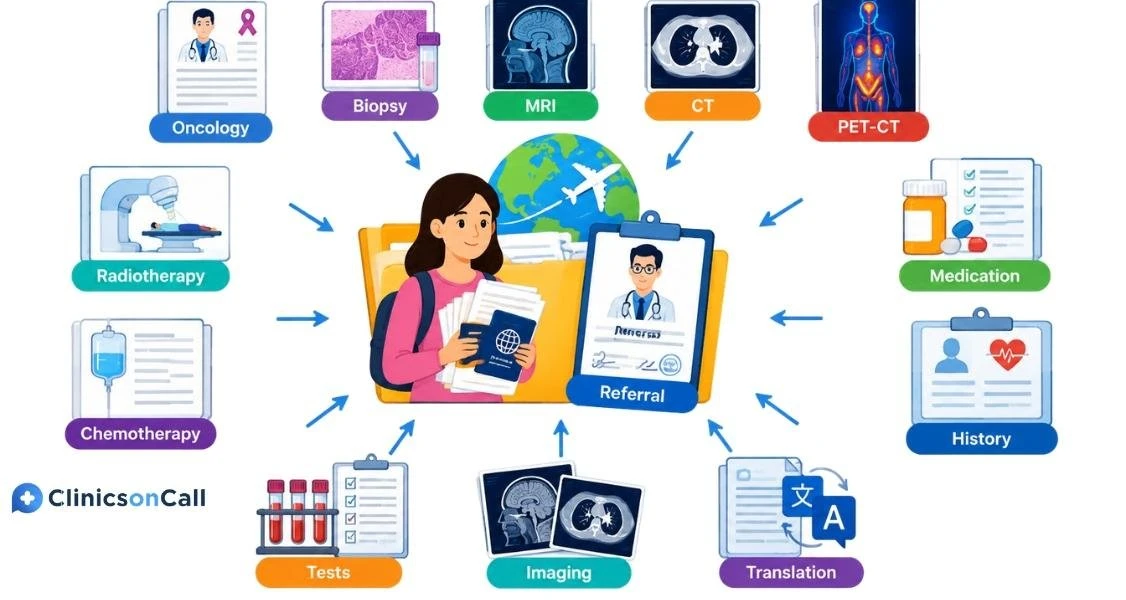
Hospitals may request additional tests or updated imaging. Documents may also need translation into English, German, or Spanish. A formal referral may be required by some centers. Patients should confirm this requirement before submitting their applications.
After medical review, the hospital may provide an acceptance decision, proposed treatment schedule, and cost estimate. Patients can then arrange visas, flights, accommodation, and local transport.
Conclusion
Choosing between Germany and Spain requires more than comparing prices. Patients should consider clinical suitability, treatment experience, waiting times, communication support, and total travel costs.
A specialist review is the most important first step. It helps patients understand whether proton therapy is appropriate and which center can provide it.
International patients can explore options through ClinicsonCall's proton therapy clinics in Germany and Spain. They can request medical assessments and compare treatment arrangements before making travel decisions.
FAQs
Is proton therapy suitable for all cancer types?
No. Its suitability depends on the tumor type, location, stage, and treatment goals. A specialist must review each case.
How long does proton therapy take?
Treatment may involve daily sessions over several weeks. The exact duration depends on the prescribed dose and number of sessions.
Is proton therapy painful?
The radiation delivery itself is generally painless. Patients may experience side effects depending on the treated area and treatment plan.
Can patients travel immediately after completing treatment?
Not always. The treating team should assess the patient's condition before travel. Patients should also ask about follow-up appointments and post-treatment monitoring.


